THESE STATEMENTS HAVE NOT BEEN EVALUATED BY THE FOOD AND DRUG ADMINISTRATION. THIS PRODUCT IS NOT INTENDED TO DIAGNOSE, TREAT, CURE OR PREVENT ANY DISEASE. ALL ARTICLES AND PRODUCT INFORMATION PROVIDED ON THIS WEBSITE ARE FOR INFORMATIONAL AND EDUCATIONAL PURPOSES ONLY.
References to human benefits are based on theoretical extrapolation from laboratory findings and should not be construed as medical claims or therapeutic recommendations. Research should be conducted only by licensed researchers in appropriate laboratory settings.
These products are not intended to be used as foods, drugs or cosmetics, any sort of bodily introduction of the products into humans or animals is strictly prohibited. They must also not be misbranded misused, or mislabeled, or used for anything other than research and scientific investigation.
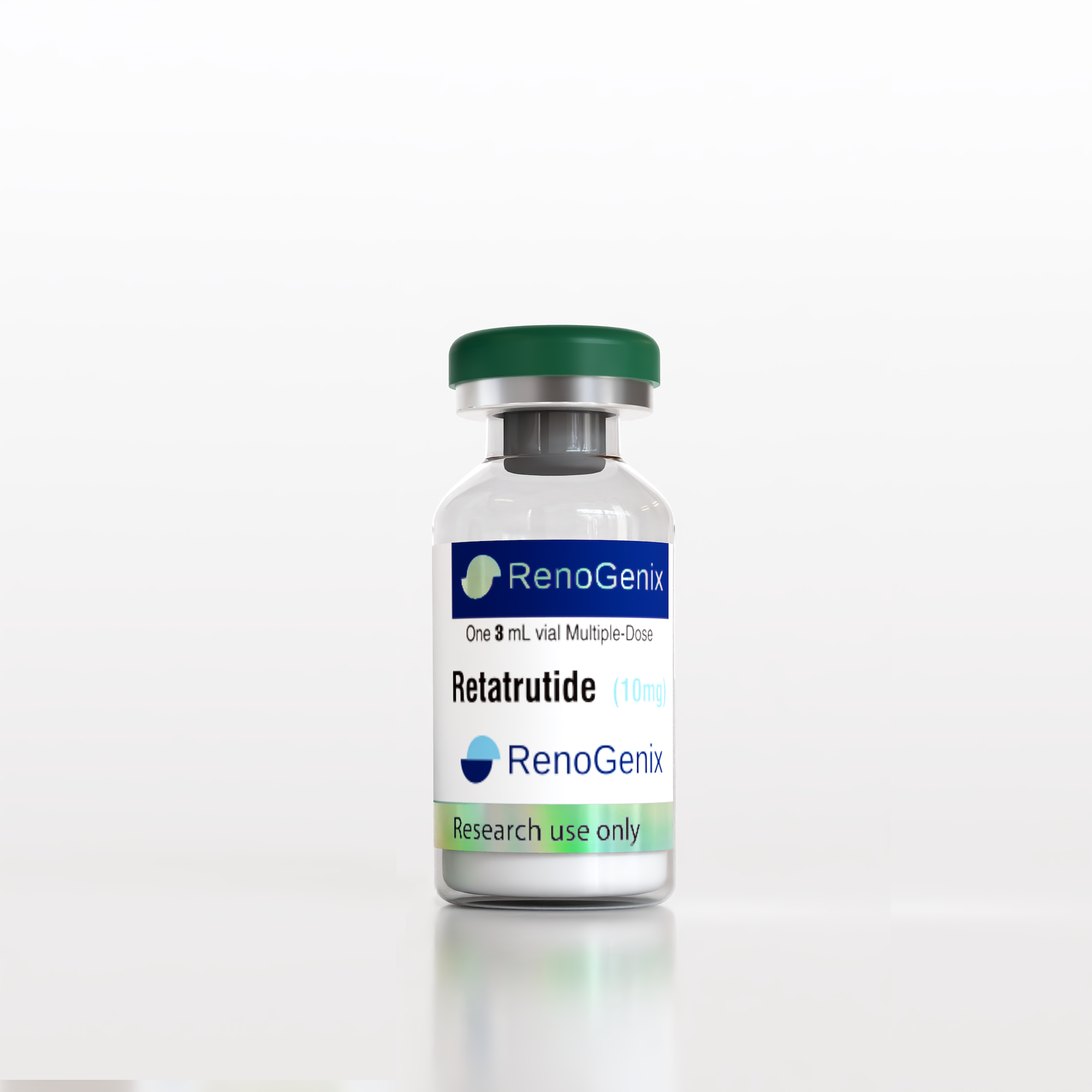
All the products you see on the website are being sold in a lyophilized powder state (freeze-dried), in a sealed sterile vial; and should be reconstituted.
The product’s label clearly states the amount of product a vial contains; some products are offered in different variations.
The products we are selling come in a sealed vial but require additional lab equipment for proper testing. This equipment includes bacteriostatic water (for reconstitution), syringes and needles (to draw the product from the vial/apply bacteriostatic water), alcohol disinfection pads etc.
Though we make sure packaging, label, seals and writing does not differ from the product photos you see on our website, there is a chance for a minimal deviation.
Retatrutide is a next-generation triple incretin/agonist that simultaneously activates the GIP, GLP-1, and glucagon (GCGR) receptors, designed for once-weekly subcutaneous dosing. In phase 2 trials, it produced large, dose-dependent weight loss (up to ~24% at 48 weeks) in adults with obesity and showed improvements in glycemic and metabolic markers; phase 3 trials are ongoing and the drug is not yet FDA-approved.
Key pharmacologic and molecular characteristics:
Single synthetic peptide tri-agonist engineered to agonize GIPR, GLP-1R, and GCGR with relatively balanced GLP-1/GCGR activity and higher GIPR activity. PubMed
Once-weekly PK profile demonstrated in early clinical studies (supports extended dosing interval). PubMed
Receptor-binding triad enables caloric-intake suppression (GLP-1/GIP) plus energy-expenditure enhancement (GCGR) for combined adiposity reduction in preclinical models. PubMed
Metabolic Signal Transduction & Systems Effects
Appetite & intake regulation: Central and peripheral GLP-1/GIP signaling reduces energy intake; dose-dependent GI slowing contributes to satiety. PubMed
Energy expenditure: GCGR activation augments energy expenditure, complementing intake reduction to deepen weight loss in animals. PubMed
Glycemic control: In early studies, improved glucose control without severe hypoglycemia; incretin mechanisms drive glucose-dependent insulinotropic effects. PubMed+1
Clinical Efficacy in Obesity & Metabolic Disease
Body-weight reduction: Phase 2, 48-week RCT in adults with obesity showed ~22.8–24.2% mean loss at 8–12 mg; broad dose-dependent reductions across arms. PubMed+1
Liver fat & adiposity: Sub-study in participants with MASLD showed significant liver-fat reduction at 24 weeks versus placebo. Nature
Diabetes cohorts: Additional analyses/trials in type 2 diabetes report clinically meaningful fat-mass loss and metabolic improvements. Wikipedia
Physiology & Pathway Readouts (preclinical/clinical inferences)
cAMP/PKA signaling downstream of GLP-1R/GIPR in pancreatic and neuronal pathways (intake control, insulin secretion). GCGR engagement supports lipid mobilization and thermogenic programs, raising total energy expenditure in animals. PubMed
Body-composition shifts: Trials and substudies indicate waist-circumference and fat-mass reductions consistent with multi-receptor mechanism. PACE-CME
Safety & Tolerability Profile (to date)
Common AEs: Predominantly GI (nausea, vomiting, diarrhea, constipation); mostly mild–moderate and dose-related; lower starting doses mitigate symptoms. PubMed
Heart-rate signal: Dose-dependent increases in resting HR peaking around week 24, then trending down. New England Journal of Medicine
Serious AEs: Overall low and comparable to placebo in trials; isolated events (e.g., acute pancreatitis) have been reported in trial summaries; no CV outcomes data yet (phase 2 not powered/designed for MACE). AccessMedicine
Regulatory status: Investigational; not FDA-approved as of November 2025. Drugs.com

Renogenix focuses on the synthesis of highly purified peptides, proteins, and amino acid derivatives for scientific research and development.
Renogenix focuses on the synthesis of highly purified peptides, proteins, and amino acid derivatives for scientific research and development.